
Memorial Day
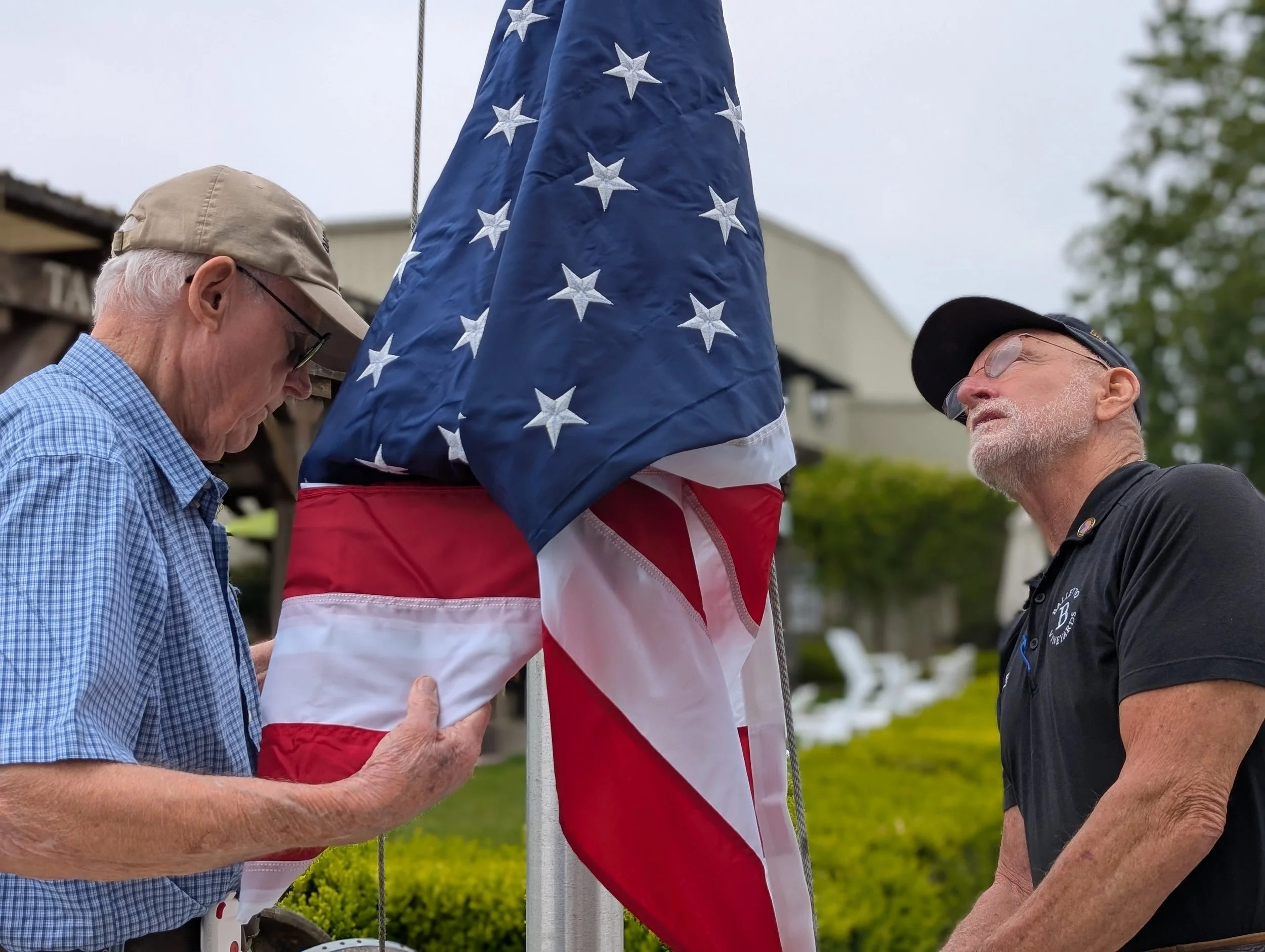
Memorial Day Tribute: Honoring Phil Cain and William Sauber
Memorial Day gives us a moment to pause, reflect, and honor those who served our country. At Balletto Vineyards, we are proud to recognize two team members whose military service is part of a lifelong commitment to duty, discipline, and helping others: Phil Cain and William Sauber.
Their stories span different branches, different eras, and very different assignments. Phil served in the U.S. Navy during the height of the Cold War, while Bill served in the U.S. Air Force during the Vietnam era. Both went on to build lives marked not only by professional achievement, but also by continued service to their communities. This tribute shares the facts of their military service, the roles they held, and the ways they continue to give back today.
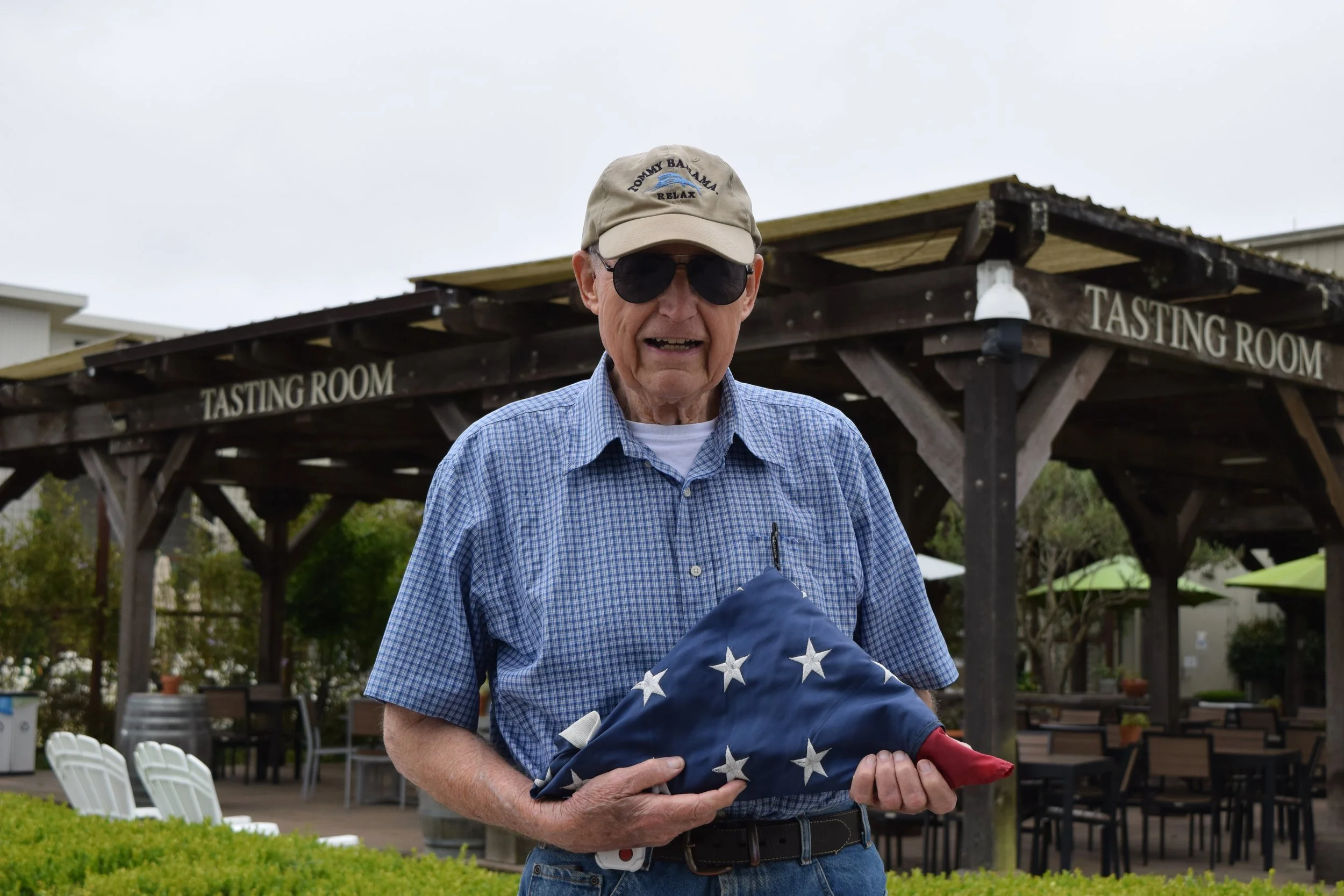
Phil Cain
U.S. Navy Service During the Cold War
Phil Cain entered active duty in the U.S. Navy on April 1, 1956, and served until September 1, 1959. His service began with nine months at Officer Candidate School in Newport, Rhode Island. Newport was home to a major Navy base and the Naval War College, making it an important center for officer training during that period. After completing Officer Candidate School, Phil attended Auxiliary Ship Gunnery School in San Diego. He then traveled to Pearl Harbor, where he joined the USS Mt. Katmai (AE-16), an ammunition ship. He spent his three years of active duty aboard that vessel.
Service Aboard the USS Mt. Katmai
The USS Mt. Katmai was an ammunition ship built to transport and transfer ordnance at sea. During Phil’s service, its mission reflected the demands of the Cold War. The ship carried a wide range of military munitions, including conventional ammunition and nuclear weapons. One of its five holds was reserved for nuclear weapons, while the others stored bombs, small arms ammunition, and other supplies used by U.S. forces. This was highly specialized and carefully monitored work. The ship used alarm systems to track heat and smoke levels, and the nuclear weapons hold was checked regularly during watch rotations. Ammunition ships played a critical support role in a period when military readiness depended on moving weapons safely across long distances and supplying other ships at sea. Phil first served as the ship’s Gunnery Officer. In that role, he was responsible for shipboard weapons and related operations. At the time, the ship was armed with a five-inch stern gun, four three-inch guns around the bridge, two 40mm anti-aircraft batteries, and four .50 caliber machine guns. These defensive systems reflected lessons learned from World War II, especially the threat of air attack. He also served as a Line Officer, a role centered on ship operations and navigation. That work included ship handling, anchoring, rearming operations, gunnery drills, and damage control training. Phil became a qualified Officer of the Deck, a position of major responsibility aboard ship. While in port, he also stood duty as a Command Duty Officer, one of the officers responsible for getting the ship underway if ordered.
Advanced Training and Reserve Service
Later in his active-duty service, Phil trained at Treasure Island. He then trained officers and crew members in defensive measures related to threats. This added another layer to a career already shaped by technical skill, operational readiness, and leadership.
After leaving active duty, Phil continued serving in the Navy Reserve for 18 years. Reserve service required regular drills and annual active-duty periods to maintain readiness. During those years, he served in an Inshore Undersea Warfare Unit focused on harbor defense and participated in a wide range of training, including:
● Ship handling
● Amphibious warfare
● Firefighting
● Anti-submarine warfare drills
● Harbor defense indoctrination
● Refresher duty aboard an active ammunition ship
As he advanced, Phil attended senior-level reserve officer training at the Naval War College in Newport. He later took on leadership roles of increasing responsibility in Northern California. He became Commanding Officer of the Naval Reserve Centers in Petaluma and Santa Rosa, and later served as Group Commander at Mare Island. He retired from the Reserves in the late 1970s.
Phil’s military career reflects both active-duty service during a critical period and nearly two decades of continued leadership in the Reserves.
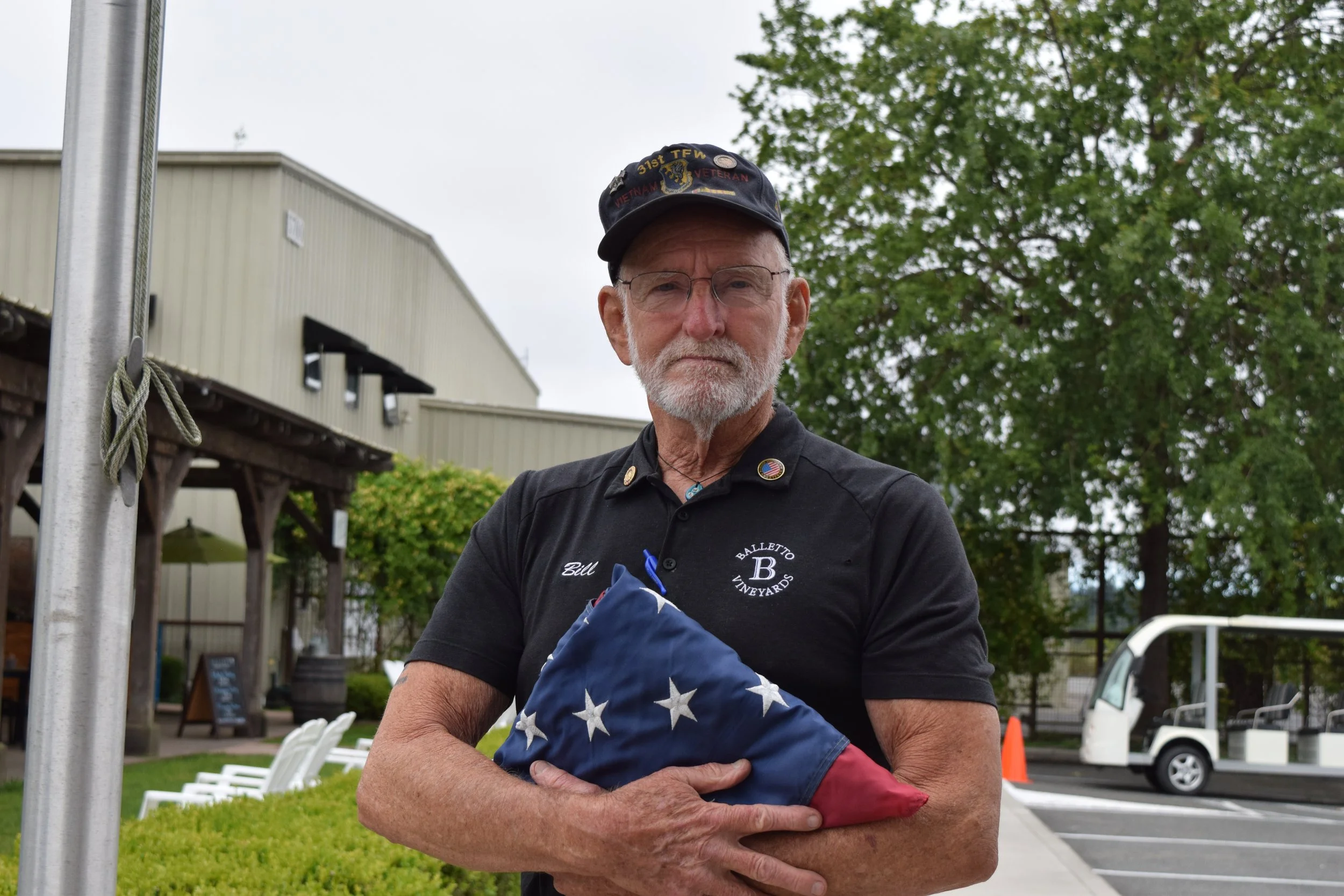
Bill Sauber
U.S. Air Force Service During the Vietnam Era
William “Bill” Sauber enlisted in the U.S. Air Force after graduating from high school in 1966. He served until 1970, including service during the Vietnam era. His decision to enlist was part of a much larger family tradition of military service that stretches across four generations.
Bill was born in Oak Park, Illinois, in 1948. His family later moved to Minnesota and then to California, where he attended high school in Novato. After his Air Force service and time in Vietnam, he attended College of Marin for two years. He later married his wife, Maxine, and earned a Bachelor of Arts in Business from Cal Poly San Luis Obispo.
A Family Legacy of Service
Bill’s service was part of a remarkable multigenerational record of military duty. His grandfather, Charles Rudell, immigrated from Sweden in the 1880s and enlisted in the Rough Riders during the Spanish-American War. A great-uncle also immigrated from Sweden and served in World War I as an ambulance driver and field hospital surgeon.
Bill’s father, Ralph Sauber, enlisted shortly after Pearl Harbor and served as a navigator on a B-17, f lying 25 missions over Nazi Germany during World War II. Bill and his brother both enlisted in the Air Force in the 1960s. His three brothers-in-law also served in the Army or Air Force. The tradition continued into the next generation when Bill’s son, Pete, enlisted in the Army after high school and served in Germany and Hungary during the Bosnian conflict.
This family history places Bill’s own Air Force service within a long line of Americans who answered the call to serve in different wars, branches, and eras.
Life After Military Service
After leaving the Air Force, Bill built a 40-year career in the farm and construction equipment industry. He worked in dealership, management, and global product leadership roles, and later earned an MBA from Saint Joseph’s University in Philadelphia while working full time.
But his commitment to service did not end with his military years.
Bill has been a Rotarian since 1998 and has served in Rotary clubs in Sebastopol, Asheville, and Carlisle. While living in Asheville, North Carolina, he became involved with Honor Air, an effort that brought veterans to Washington, D.C., to visit the memorials built in their honor. He worked with one of the organization’s founders and served as a guardian on several flights, helping veterans make the trip.
He also served on the boards of United Way of Buncombe County and the American Red Cross of Western North Carolina. His long record of volunteer work reflects the same steady sense of duty that marked his years in uniform.
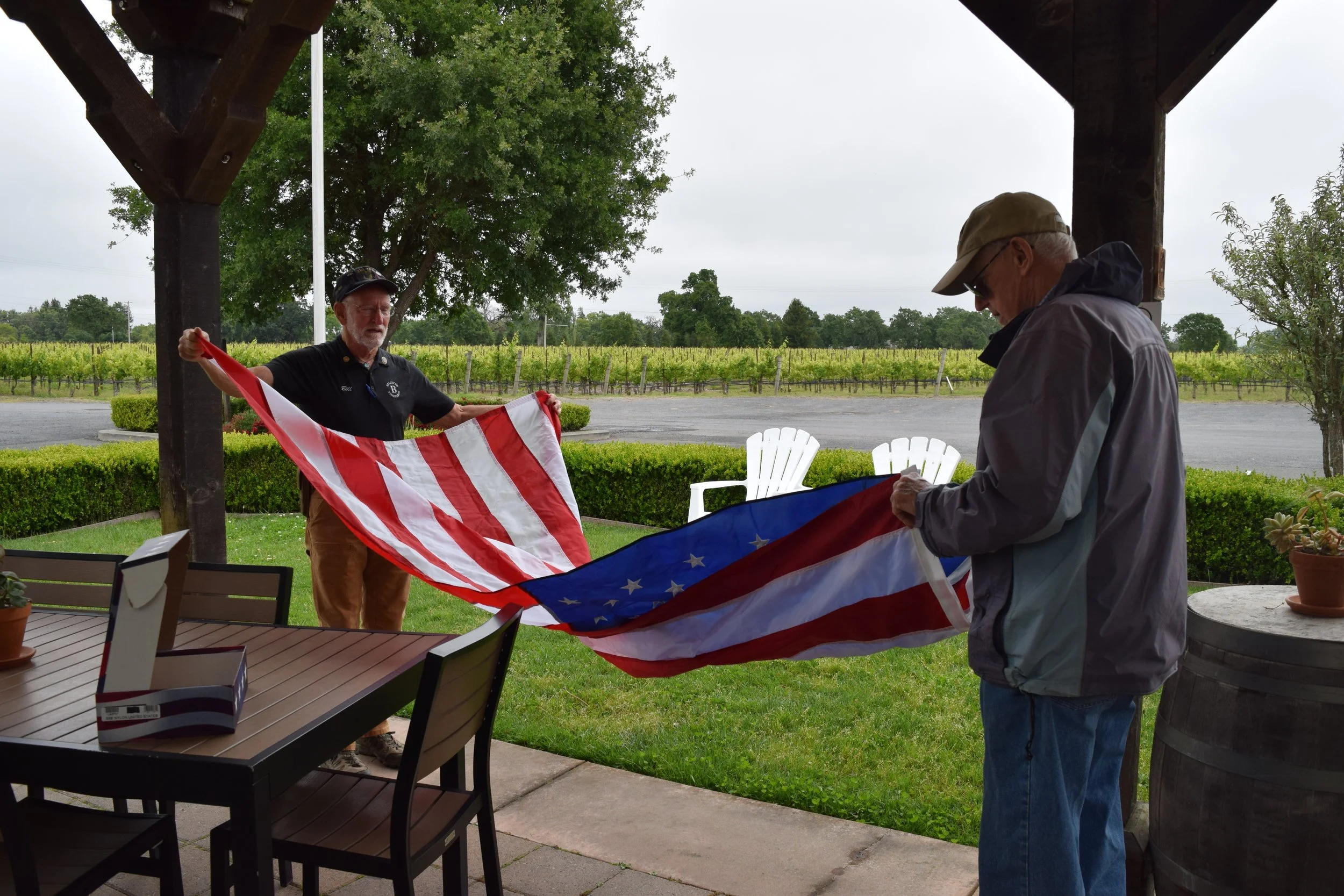
Service That Continues Beyond the Uniform
Phil Cain and Bill Sauber served in different branches and different decades, but their stories share a common thread. Both answered the call to serve. Both took on serious responsibilities during periods of international tension and conflict. And both continued to contribute long after their military years ended.
This Memorial Day, Balletto Vineyards honors Phil Cain and William Sauber with gratitude and respect. We thank them not only for their military service, but also for the example they continue to set through service to others. Their stories remind us that commitment to country and community often lasts a lifetime.